BMW 1176671 Marker
fits make: Bmw.
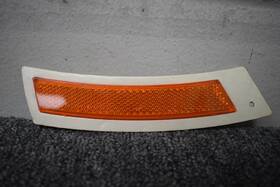
( Manufacturer Part Number: 1176671 ), ( Universal Fitment: No ), ( Country Of Origin: Germany )
Review BMW Side Marker Factory Oem
The **BMW 1176671 Marker** is a high-performance, precision-engineered component designed exclusively for BMW vehicles, serving as a critical part of the engine s fuel injection system. This marker, also known as a fuel rail pressure sensor or fuel pressure sensor, plays a pivotal role in maintaining optimal engine performance by continuously monitoring the fuel pressure within the high-pressure fuel rail. Crafted with BMW s signature attention to detail, this sensor is built to exacting standards, ensuring reliability and accuracy across a wide range of operating conditions. The 1176671 Marker is equipped with a robust, durable housing that protects its internal components from contaminants, vibrations, and thermal fluctuations, which are common in high-stress driving environments. Inside, a sophisticated pressure-sensitive element works in tandem with advanced electronics to provide real-time data to the vehicle s engine control unit (ECU), allowing for precise fuel delivery and efficient combustion. This sensor is particularly vital for modern BMW engines that rely on direct fuel injection, as it helps prevent issues such as fuel starvation, misfires, or excessive emissions. Whether installed in a high-performance M-series vehicle or a more refined touring model, the 1176671 Marker ensures that the engine operates at peak efficiency, delivering the power, responsiveness, and smoothness that BMW drivers expect. Its compatibility with select BMW models including those equipped with turbocharged or naturally aspirated inline-4 or inline-6 engines makes it an indispensable part of maintaining the vehicle s performance and longevity. For enthusiasts and mechanics alike, this sensor represents the intersection of cutting-edge automotive technology and BMW s commitment to engineering excellence.
### **Pros and Cons of Buying a BMW 1176671 Marker (Used Car)**
#### **Overview**
The **BMW 1176671** refers to the **F20/F21 118i/120i (F20) and F22 123i (F22) models**, specifically the **2014 2017 generation** of the BMW 1 Series (F20) and 2 Series Gran Coupe (F22). These cars were well-regarded for their driving dynamics, luxury, and BMW s signature performance. However, like any used vehicle, they come with advantages and potential drawbacks.
---
### **Pros**
1. **Strong Driving Dynamics & Handling**
- The F20/F22 models are known for their **precise steering, balanced chassis, and engaging driving experience**, making them a favorite among enthusiasts.
- Available **xDrive (AWD) and M Sport packages** enhance performance and stability, especially in wet or challenging conditions.
2. **Luxury & Interior Quality**
- BMW s **premium interior materials** (soft-touch plastics, wood/aluminum trim options) provide a high-end feel.
- **Comfortable seats** (especially in higher trims) with good lateral support and adjustable features.
- **High-quality audio systems** (optional Bang & Olufsen or Harman Kardon) and **infotainment** (iDrive 6 or 7, depending on model year).
3. **Reliability (Compared to Competitors)**
- The **N20/N26 inline-4 engines** (used in most 118i/120i models) are **durable** if maintained properly, with fewer major issues than some rivals (e.g., older Toyota or Honda engines).
- The **N55 (twin-turbo) engine** (found in some 123i models) is **powerful (228 231 hp)** but requires **regular oil changes and cooling system checks** to prevent carbon buildup.
4. **Resale Value & Brand Prestige**
- BMW retains **strong resale value** compared to many competitors, especially in the luxury compact segment.
- The brand carries **prestige**, which can be appealing if you value BMW s reputation.
5. **Safety Features**
- Standard **iDrive safety features** (adaptive cruise control, lane departure warning, automatic emergency braking in later models).
- **Good crash test ratings** (IIHS and Euro NCAP) for the class.
6. **Aftermarket & Customization Options**
- A **thriving aftermarket** for parts (suspension, exhaust, performance chips) and tuning support.
- Easier to modify than some Japanese rivals due to BMW s open architecture.
7. **Fuel Efficiency (Compared to V6 Models)**
- The **N20/N26 engines** offer **better MPG ( 28 32 city, 35 40 highway)** than the more powerful N55/N57 V8/V6 models.
---
### **Cons**
1. **Higher Maintenance Costs**
- BMWs are **more expensive to maintain** than Japanese or European rivals (e.g., Toyota Corolla, Honda Civic, or Audi A3).
- **Common issues** include:- **Carbon buildup in turbocharged engines** (N55/N57) leading to **rough idling or misfires** if not serviced properly.
- **Water pump failures** (especially in older F20 models) can be costly if not caught early.
- **Electrical gremlins** (iDrive glitches, sensor failures) due to complex BMW systems.
- **Suspension wear** (struts, bushings) may need replacement sooner than expected.
2. **Engine & Transmission Issues**
- **N20/N26 engines** (most common in 118i/120i) are **reliable but thirsty** expect **higher fuel consumption** than a naturally aspirated car.
- **N55/N57 engines** (in 123i M Sport or higher trims) are **powerful but prone to carbon buildup**, requiring **regular valve cleaning (every 60K 80K miles)**.
- **6-speed Getrag transmissions** (standard) are **durable but can be finicky** some owners report **clutch or shift solenoid issues** over time.
3. **Rust & Bodywork Concerns**
- **F20/F22 models are susceptible to rust**, particularly in:- **Wheel arches**
- **Rockers**
- **Sill panels**
- **Check for rust** before purchasing, especially if the car has seen **salt exposure** (snowy regions).
4. **Infotainment & Tech Limitations**
- **iDrive 6 (F20) and iDrive 7 (F22) can be slow and glitchy** compared to modern systems.
- **No Apple CarPlay/Android Auto** (until 2017 models, which have limited compatibility).
- **Bluetooth connectivity issues** are a common complaint.
5. **Depreciation & Insurance Costs**
- While BMWs hold value well, **insurance premiums** for these models can be **higher than average** due to repair costs.
- **Theft risk** is higher than for some Japanese competitors.
6. **Comfort & Practicality Trade-offs**
- **Rigid ride quality** while fun to drive, the **F20/F22 can be stiff and noisy** on rough roads.
- **Small rear seats** limited space for passengers (especially in the Gran Coupe).
- **Trunk space** is **adequate but not as large as a Honda Civic or Toyota Corolla**.
7. **Recall & Warranty Issues**
- Some **F20/F22 models had recalls** for:- **Airbag defects** (Takata)
- **Fuel pump failures** (N20 engines)
- **Electrical system malfunctions**
- **Extended warranties** (if available) can be costly.
---
### **Conclusion**
The **BMW 1176671 (F20/F22 118i/120i/123i)** is an **excellent choice for buyers who prioritize driving enjoyment, luxury, and BMW s brand prestige** but only if they are **prepared for higher maintenance costs and potential reliability quirks**. It is **not ideal** for those seeking **ultra-low running costs, maximum practicality, or a car with minimal tech limitations**.
#### **Best For:**- **Enthusiasts** who want a **fun, sporty, and engaging** daily driver.
- **Luxury-focused buyers** who value **premium interiors and brand image**.
- **Owners who can afford** **regular maintenance (oil changes, carbon cleaning, rust checks)**.
- **Those who enjoy tuning and modifying** their car.
#### **Not Ideal For:**- **Budget-conscious buyers** (high insurance, repairs, and fuel costs).
- **Families needing** **more space or comfort** (small rear seats, stiff ride).
- **Those who dislike** **complex electronics or frequent servicing**.
- **Buyers who want** **modern tech (CarPlay/Android Auto, advanced driver aids)**.
---
### **Recommendation**
If you **find a well-maintained example** (with **full service history, no rust, and a clean title**), the **BMW F20/F22 118i/120i/123i is a fantastic used car** especially if you **budget for potential future repairs**. However, **compare it carefully with alternatives** like:
- **Audi A3 (8L) or S3** (similar driving dynamics, slightly better reliability in some cases).
- **Lexus IS 250/350** (more reliable, better warranty, but less engaging).
- **Toyota 86/Subaru BRZ** (if you want a **pure driving experience with lower costs**).
**Before purchasing:****Get a pre-purchase inspection** (focus on **engine condition, rust, transmission, and electrical systems**).
**Verify service records** (especially **oil changes, carbon cleaning, and cooling system checks**).
**Check for recalls** (BMW s website or a dealer).
**Test drive thoroughly** (listen for **unusual noises, check steering feel, and test all electronics**).
**Final Verdict:****Buy if** you love BMWs, can afford the maintenance, and find a **low-mileage, well-cared-for example**. **Avoid if** you want a **no-fuss, low-cost, or ultra-reliable** used car.
Details:
part #: 1176671 price
- $60.38
specifications sidemarkeligh:
- for makes: Bmw
- mpn: 1176671
- universal fitment: No
- country of origin: Germany
payments sidemarkeligh:
- other
- credit card: Discover
- wallet: Google-pay
shipping sidemarkeligh:
- service: UPS Ground
- transit: 4-7 Days
- class: Standard
- carrier: UPS
- cost: $20.00
- type: Fixed
seller sidemarkeligh:
- city: Alpharetta, Georgia
- # reviews: 2325
- rating: 99.5%
returns sidemarkeligh:
- paid by: Seller
- policy: Returns Accepted
- time: 30 Days
general sidemarkeligh:
- condition: Used
- Car Truck Parts Accessories > Lighting Lamps > Side Marker Light Assemblies
offer sidemarkeligh:
- availability: In Stock
- quantity: 1
- started: February 27, 2026
- sold: 0
- options: Ship-to-home
Bmw 1176671 Is Similar To:
- 2800cs Saep1a69 Bmw E9 E10 3.0cs Side Marker Lens Reflectors Oem 1970-1976 (47.7% similar) Please see my other offers for more vintage bmw and Mercedes parts. The parts in this offer are used factory original parts in excellent condition. One of the telltale signs of a us spec bmw in the early 70S are the addition of these rear side reflectors. Installing these increases the originality ...(September 6th, 2016)
- Side-7 P285 87-95 Bmw Corner Light Rh-passenger Series-turn Signal Marker Lamp Lens 63.13 1374 2-polig (20.4% similar) Bmw front corner signal light assembly right passenger side...(December 29th, 2015)
- Signal-7 63.13-1370 P25-2 Bmw Front Corner Light Turn Series Right Side-marker Lamp Lens Assmbly (26% similar) Removed from 1984 733I us 3POLIG includes lens w gasket, housing, mounting screws bulb not tested, harness with connector and rubber protector. Possibly fits other 7 series model's and years...(October 30th, 2015)
- Side Nos 63141351886 Bmw Vintage E3 Reflector (27.5% similar) The part number is a new old stock bmw e3 chassis side reflector. This part has never been mounted on a vehicle...(March 30th, 2015)
- 63141352937 Bmw 2002 Front Side (27.3% similar) ...(August 13th, 2017)
- 63141360249 Bmw Side Marker Rear Leaft For Series And (50% similar) Side marker rear leafy for bmw 3 series E-21, 5 E-12 and 6 E-24...(December 20th, 2018)
- 63141377849 Bmw Amber Yellow Corner Marker Light Side Bumper Lamp Oem (36.5% similar) The item must arrive back in same condition as it was shipped. C bumper, inc. Our new parts are always first quality, what you get from a bmw dealer, and they carry the standard dealer warranty usually 1-2 years, unlimited miles. C bumper, inc. Our used parts are carefully removed and tested using ...(May 13th, 2018)
- 63141351895 Bmw 2002 Front Side Marker Lights 2002tii Tii Ti 1600 63141351896 (33.9% similar) ...(October 24th, 2016)
- 63137164758 Bmw Hella 2002 2008 7 Series Right Fender Marker Light Turn Signal Oem 63136906394 (37.2% similar) May need programming to your vehicle. Electrical items, modules, throttle bodies, etc. Often this is either FedEx home delivery or USPS priority mail, but may be USPS first class or some other. Choose anything else Andrew automated system takes control. This is a good, used passenger side, fender ...(June 9th, 2016)
- Automotive Lighting 63 13 6 902 766 Bmw E46 99-01 Turn Signal Light With Yellow Lens Front Right Passenger Side Oem (20% similar) Brand new part with 1 year warranty, bmw # 63 13 6/9 02 766. Position qty: front right bmw E46 1999 -08/2001 turn signal light w/ yellow lens: front right passenger side oem: part fits. All parts have 1 year warranty. Made by automotive lighting, oem, if you are not sure about the part fitting your...(August 16th, 2023)
- Automotive Lighting 63 13 6 919 649 Bmw E46 01-03 Turn Signal Light With Yellow Lens Front Left Driver Side Oem (20.5% similar) Position qty: front left brand new part with full 1 year warranty. Bmw E46 01-03 turn signal light with yellow lens front left driver side oem: part fits. All parts have 1 year warranty. Made by automotive lighting, oem. Bmw part # 63 13 6/9 19 649. Part applications. Left driver side front...(August 17th, 2023)